WELCOME TO OUR BLOG

We're sharing knowledge in the areas which fascinate us the most
click

How to Build a Flexible 8K Video Wall System with Custom Resolution for LED and Multi-Screen Applications

By Mimo May 19th, 2026 0 views

How to Build a Flexible 8K Video Wall System with Custom Resolution for LED and Multi-Screen Applications

Introduction: The Shift Toward Flexible Video Wall Systems

Modern professional AV environments are evolving rapidly. Applications such as control rooms, broadcast studios, retail digital signage, and immersive LED installations are no longer satisfied with traditional single-screen or fixed-resolution display systems.

Instead, system integrators are facing increasing demand for:

  • Flexible multi-screen video wall layouts
  • Ultra-high-resolution content processing
  • Support for irregular LED display structures
  • Accurate pixel-level image mapping

However, conventional video wall systems still rely heavily on fixed output resolutions such as 1080p or 4K UHD. This creates limitations when deploying complex LED video walls or non-standard display environments.

Common issues include:

  • Image stretching or distortion on LED walls
  • Inconsistent scaling across multiple screens
  • Limited EDID compatibility
  • Inability to support irregular display shapes

To overcome these challenges, 8K video wall processing with custom resolution capability has become a critical requirement in modern AV system design.


What Is an 8K Video Wall Splicing Processor?

An 8K video wall splicing processor is a professional AV device designed to take multiple video inputs and distribute them across multiple displays, forming a unified visual canvas.

Unlike a traditional HDMI matrix switcher, a video wall processor provides advanced visualization control, including:

  • Multi-screen splicing configurations (2×2, 1×3, 1×4, 3×3, irregular layouts)
  • Real-time video scaling and processing
  • Multi-layer window display (PIP / POP)
  • Flexible input-to-output mapping
  • Frame-synchronized multi-display output

In essence, it acts as the central processing engine of a professional video wall system, enabling complex display architectures that go far beyond simple signal switching.


Why Custom Resolution Is Critical in Modern AV Systems

In real-world AV projects, display environments are rarely standardized.

System integrators frequently encounter:

  • Ultra-wide LED video walls
  • Curved or circular LED displays
  • Mixed LCD and LED hybrid systems
  • Architectural integrated display structures
  • Irregular creative display installations

In these scenarios, fixed resolution output becomes a serious limitation.

Limitations of Fixed Resolution Systems:

  • Pixel distortion due to forced scaling
  • Wasted LED pixel density
  • Poor alignment in multi-screen systems
  • Reduced image clarity in non-standard layouts

Advantages of Custom Resolution:

  • Pixel-perfect mapping to physical display structures
  • Flexible aspect ratio support
  • Accurate scaling across all display zones
  • Seamless integration with LED systems

As a result, custom resolution video wall processing has become a fundamental requirement for high-end AV installations.


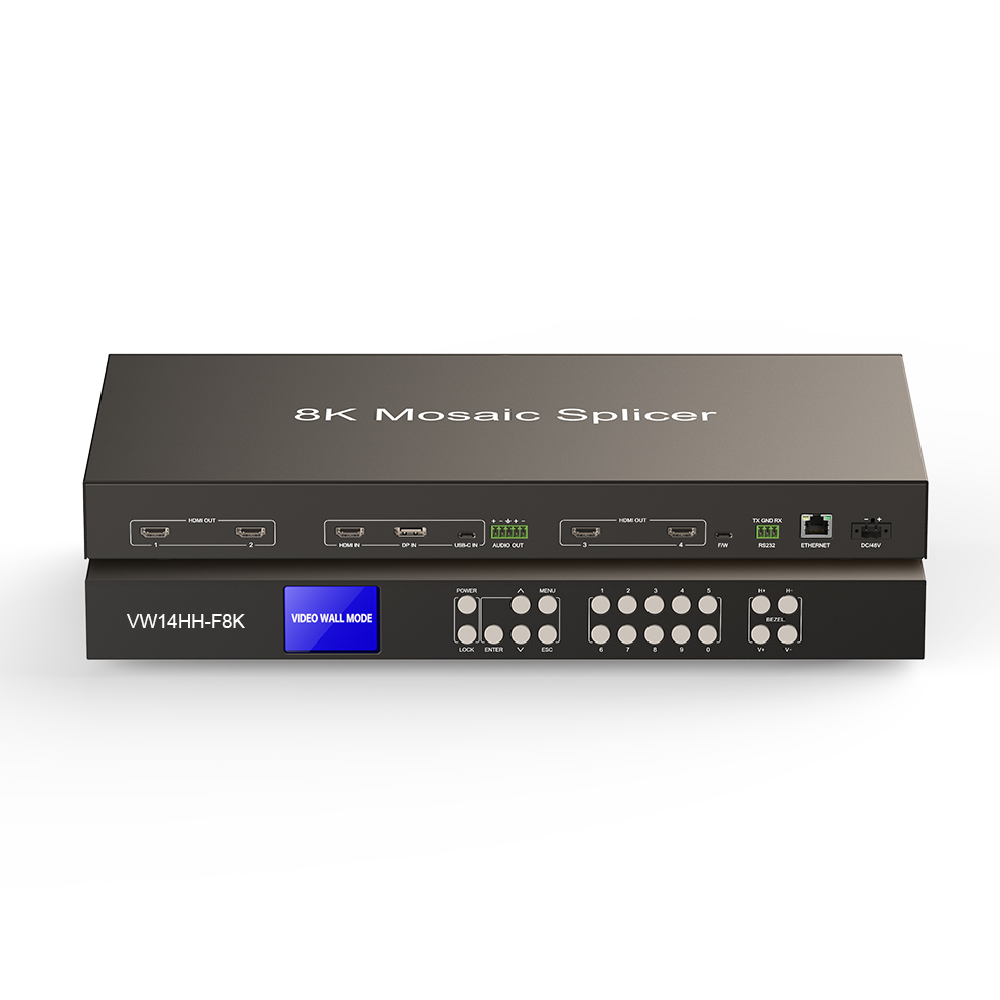
Introducing the 8K Video Wall Splicing Platform

The
VW14HH-F8K 8K Mosaic Splicer
is designed as a high-performance 8K video wall splicing and custom resolution processing platform, built specifically for complex professional AV environments.

Unlike traditional video wall controllers that focus only on signal switching or basic scaling, this system integrates advanced processing, flexible mapping, and full-resolution control into a single engine.


🎯 Core Product Advantages (Key Differentiation)

1. True 8K Processing Architecture

The system features a high-bandwidth 8K processing engine that enables:

  • Multi-source 4K/8K input decoding
  • Low-latency real-time image processing
  • Multi-layer video composition without quality loss
  • Stable performance under heavy multi-screen workloads

👉 This ensures smooth operation even in large-scale video wall deployments.


2. Fully Customizable Resolution Output Engine

One of the most important advantages of the system is its fully programmable resolution output capability.

Unlike traditional systems restricted by EDID or fixed VESA standards, this platform allows:

  • User-defined output resolutions per channel
  • Independent scaling for each display zone
  • Non-standard LED resolution support
  • Ultra-wide or irregular canvas generation
  • Real-time resolution switching without signal interruption

👉 This makes it ideal for LED video walls with complex pixel structures.


3. Advanced Video Wall Splicing & Mosaic Control

The system supports multiple professional video wall configurations, including:

  • 2×2, 1×3, 1×4, 3×3 standard layouts
  • Fully irregular mosaic structures
  • Flexible window positioning (drag & resize)
  • Multi-layer PIP / POP display modes

👉 Each layout can be dynamically configured without re-cabling or hardware changes.


4. Precision Pixel Mapping for LED Systems

A key advantage in LED-based installations is pixel-level mapping accuracy.

The system ensures:

  • Exact alignment with LED cabinet structures
  • No image distortion or scaling artifacts
  • Consistent geometry across all display zones
  • Perfect synchronization across multi-screen outputs

👉 This is especially critical for fine-pitch LED walls and creative installations.


5. Programmable EDID & Signal Stability Engine

To solve compatibility issues in complex AV systems, the platform includes a programmable EDID management system.

It enables:

  • Custom EDID emulation for different display types
  • Stable handshake with GPUs and media servers
  • Elimination of resolution negotiation failures
  • Reliable operation in mission-critical environments

6. Flexible Multi-Input & System Integration

The system supports professional-grade input flexibility, including:

  • HDMI / DP / USB-C input sources
  • Multi-device simultaneous processing
  • Seamless integration into existing AV infrastructures
  • Scalable deployment for large installations

🧠 Product Positioning Insight

In modern AV system design, the role of a video wall processor is no longer just signal distribution.

Instead, this platform functions as:

👉 A resolution definition engine
👉 A pixel mapping controller
👉 A multi-display orchestration system


🚀 Why This Matters in Real Projects

By combining 8K processing power + custom resolution control + pixel-level mapping, the system enables integrators to:

  • Deploy non-standard LED video walls without constraints
  • Build ultra-wide or irregular display environments
  • Eliminate compatibility issues caused by EDID limitations
  • Achieve consistent visual performance across all screens


8K Custom Resolution Processing Architecture

Modern systems such as the
VW14HH-F8K 8K Mosaic Splicer
introduce a fundamentally different processing architecture.

Instead of treating 8K as a fixed output format, the system uses it as a flexible processing canvas.

This allows integrators to define fully custom display configurations, including:

  • Ultra-wide resolutions for control room dashboards
  • Non-standard LED pixel formats
  • Asymmetric multi-screen video walls
  • Independent resolution zones within a single system
  • Creative aspect ratio layouts for immersive environments

Example custom configurations include:

  • 7680×1200 ultra-wide control walls
  • 3840×480 LED strip displays
  • 1920×1920 square LED installations

Key Concept:

👉 Resolution is no longer fixed — it is programmable.


How the System Works

The custom resolution workflow in an 8K video wall processor consists of four main stages:

1. Input Processing Layer

Multiple video sources such as PCs, cameras, and media servers are received and decoded into a unified processing pipeline.

2. Canvas Definition Layer

Operators define a virtual display canvas, including:

  • Total system resolution
  • Screen layout structure
  • Zone segmentation and arrangement

3. Output Mapping Layer

Each output port can be assigned:

  • Independent resolution settings
  • Specific scaling behavior
  • Dedicated display zones

4. Pixel Rendering Layer

The system performs real-time rendering based on:

  • LED physical pixel structure
  • Display geometry
  • Content scaling requirements

This ensures pixel-accurate output without distortion or loss of detail.


Breaking the Limitations of EDID in Traditional Systems

In conventional HDMI-based systems, EDID (Extended Display Identification Data) plays a critical role in determining resolution negotiation between devices.

However, this often results in:

  • Forced fallback to lower resolutions (such as 1080p)
  • Signal handshake failures between GPU and display
  • Compatibility issues with LED processors
  • Limited support for non-standard display formats

With a custom resolution video wall processor, EDID limitations are eliminated through programmable control.

Benefits include:

  • Fully programmable EDID emulation
  • Stable signal handshake across complex systems
  • Direct GPU-to-LED compatibility optimization
  • Reliable performance in mission-critical environments

Why 8K Processing Still Matters Even for Non-8K Displays

Even when the final display system is not 8K, an 8K processing engine provides significant advantages:

  • Higher internal processing bandwidth for smoother rendering
  • Improved multi-window and multi-layer performance
  • More precise scaling across multiple displays
  • Future-ready architecture for next-generation LED systems

This makes 8K processing not just a resolution specification, but a system-level performance foundation.


Application Scenarios

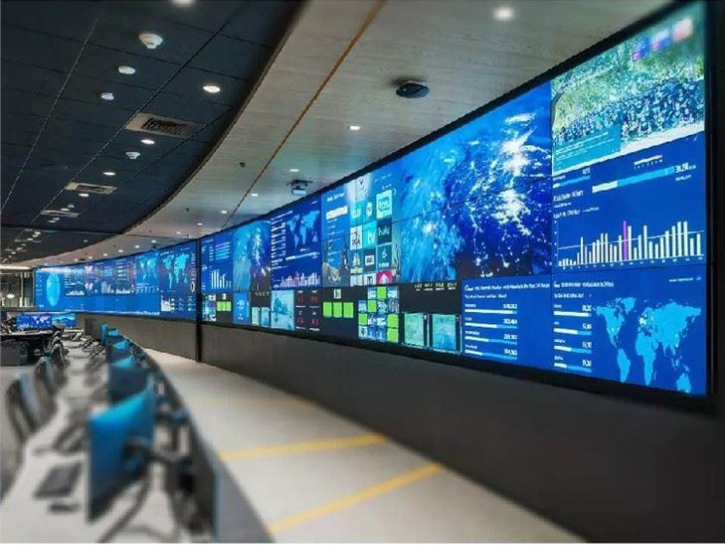
Command & Control Centers

  • Real-time monitoring dashboards
  • Multi-source data visualization
  • Ultra-wide operational displays

Broadcast & Production Studios

  • Live production switching environments
  • Multi-camera preview systems
  • Dynamic content layouts

Retail & Digital Signage

  • Creative LED installations
  • Immersive brand storytelling displays
  • Flexible content adaptation

Exhibition & Event Spaces

  • Rapid deployment video wall systems
  • Temporary creative installations
  • Flexible multi-screen configurations

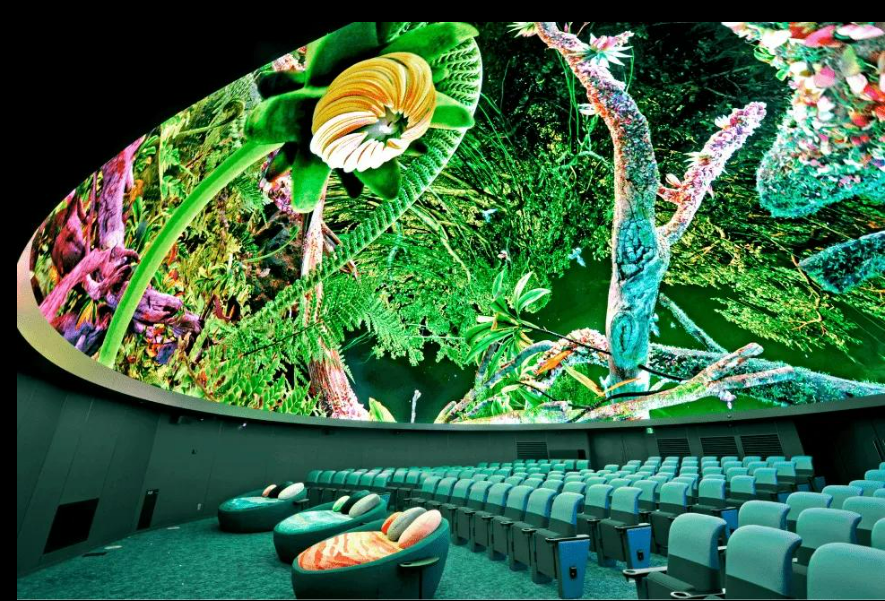
Irregular and Complex LED Display Applications

Modern AV installations increasingly require support for non-standard display geometries.

Typical examples include:

  • Circular LED displays
  • Curved or arc-shaped video walls
  • Architectural embedded LED systems
  • Asymmetric multi-panel LED structures

These environments require more than traditional scaling—they demand true pixel-level control.

With advanced custom resolution processing, systems can achieve:

  • Pixel-accurate mapping across complex geometries
  • Fully flexible resolution definition
  • Independent output zone control
  • Preservation of full 8K image quality

This capability is especially critical in immersive and architectural AV projects.


Conclusion: The Future of Video Wall Systems

The professional AV industry is rapidly transitioning from fixed-format display systems to software-defined, resolution-flexible architectures.

In this evolution, custom resolution is no longer an advanced feature—it is a baseline requirement.

Modern video wall systems must support:

  • Non-standard LED display structures
  • Flexible multi-screen environments
  • Pixel-level mapping accuracy
  • Scalable system architectures

The VW14HH-F8K 8K Mosaic Splicer enables this transformation by combining:

  • 8K processing performance
  • Fully customizable resolution output
  • Advanced video wall splicing capabilities
  • True pixel-level display control

This makes it a future-ready solution for next-generation professional AV installations.

Previous
What Is an 8K Video Wall Processor? Complete Guide for Modern Multi-Screen AV Systems
Read More
Next
8K LED Video Wall System for High-End Exhibition and Museum Display Applications
Read More
Leave a message
Full Name*
Email*
Message*
Message Us