
Extending HDMI signals over long distances has become a standard requirement in modern AV installations.
Whether it's a conference room, home theater, hotel, classroom, or digital signage deployment, HDMI extenders provide a practical way to deliver high-quality 4K video where traditional HDMI cables simply can't reach.
In many projects, everything appears to be working as expected once the display is connected and the video signal is on screen.
Then a familiar issue starts to surface.
The image is there, but the audio generated by the display can't make its way back to the amplifier, soundbar, or AV receiver.
As Smart TVs and interactive displays continue to replace traditional source devices, this scenario is becoming increasingly common.
Today, users frequently access content directly from:
In these environments, the display is no longer acting as a passive screen. It has effectively become the source device.
And that's where many HDMI extension systems begin to show their limitations.
Most HDMI extenders are designed around a one-way signal path.
A typical setup looks like this:
Source Device → HDMI Extender → Display
This works well when video and audio both originate from a Blu-ray player, media player, PC, or set-top box.
However, once content is launched directly from the display, the signal flow changes.
The audio now needs to travel back from the display to the audio system:
Display → Soundbar / Amplifier / AV Receiver
Unfortunately, many standard HDMI extenders were never designed to handle this return path.
To work around the limitation, installers often add:
While these solutions can solve the problem, they also add complexity to the overall system design.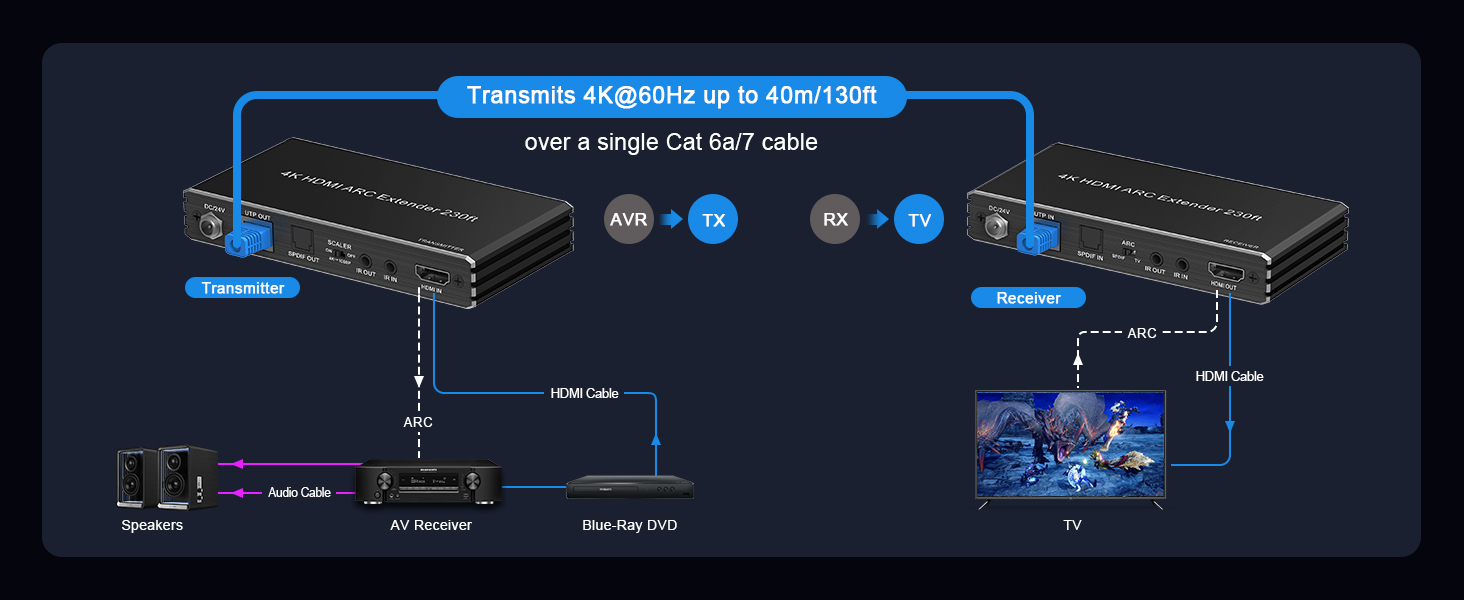
Running a dedicated audio return path may not seem like a major concern during installation, but it can create challenges over time.
Additional cables require additional planning, routing, and testing.
Every converter, extractor, and audio cable adds to the project budget.
The more devices involved, the more potential issues there are to diagnose later.
Future upgrades become more complicated when audio and video are routed through separate infrastructures.
For AV integrators, a simpler signal path is often the most reliable one.
ARC, short for Audio Return Channel, was developed to address exactly this challenge.
Instead of introducing separate audio cabling, ARC allows audio generated by the display to travel back through the existing HDMI connection.
For installers, this means:
As streaming platforms and smart displays become standard across both residential and commercial AV environments, ARC support is increasingly expected as part of a modern HDMI extension system.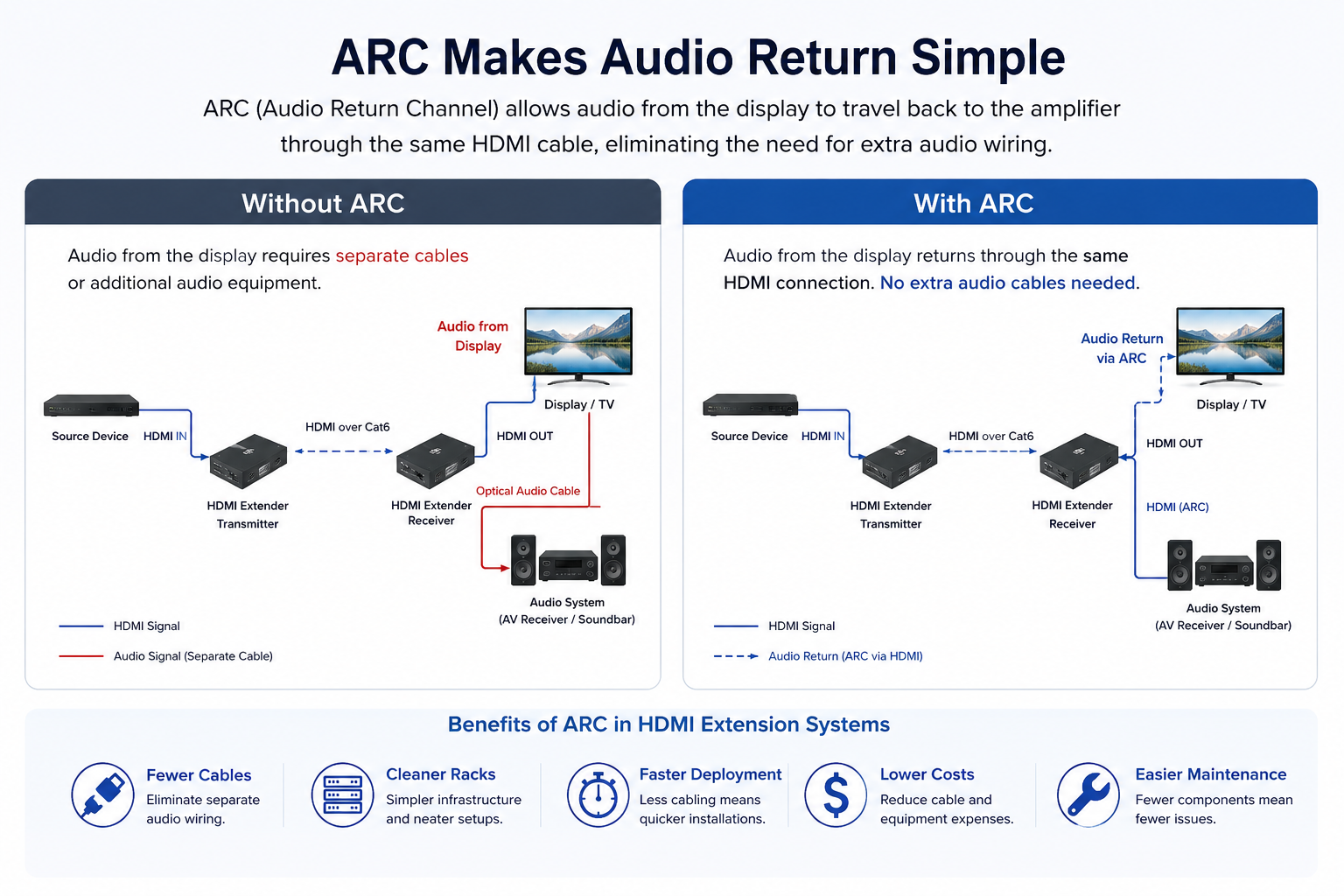
The GPro EX70H2 is designed for installations that require both long-distance HDMI transmission and reliable audio return.
By integrating ARC directly into the extender system, it removes the need for separate audio return infrastructure while maintaining full 4K video performance.
For conference rooms, home theaters, hospitality projects, and digital signage applications, the EX70H2 provides a straightforward way to extend video while keeping audio return within the same infrastructure.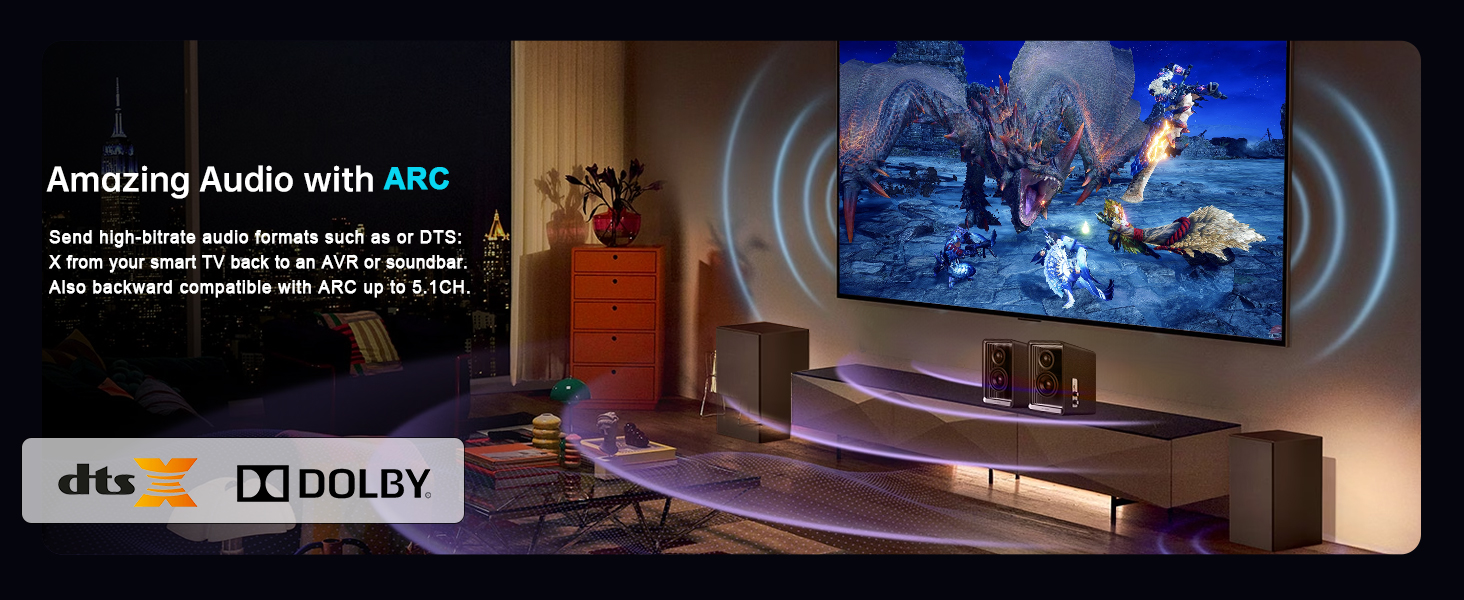
Mixed-display environments are common in commercial AV systems.
The built-in downscaling function allows 4K and 1080P displays to work together without requiring additional processing equipment.
A single power adapter can power both the transmitter and receiver, reducing cable clutter and simplifying installation.
Remote control signals can travel in either direction, making it easier to operate source devices stored in remote equipment racks.
The way people consume content has changed.
As Smart TVs, interactive displays, and streaming platforms become central to modern AV systems, audio increasingly originates from the display rather than an external source.
That shift has exposed a limitation in many traditional HDMI extension systems.
While video extension remains straightforward, audio return often requires additional cabling, converters, and installation effort.
An HDMI Extender with ARC provides a more streamlined approach by allowing audio to travel back through the same HDMI infrastructure already being used for video distribution.
For AV integrators looking to simplify system design, reduce hardware requirements, and improve installation efficiency, ARC is no longer a feature that's simply nice to have—it has become an important part of modern AV deployment.

