4K60 4x4 HDMI Matrix with Scaler

4K60 4x4 HDMI Matrix with Scaler

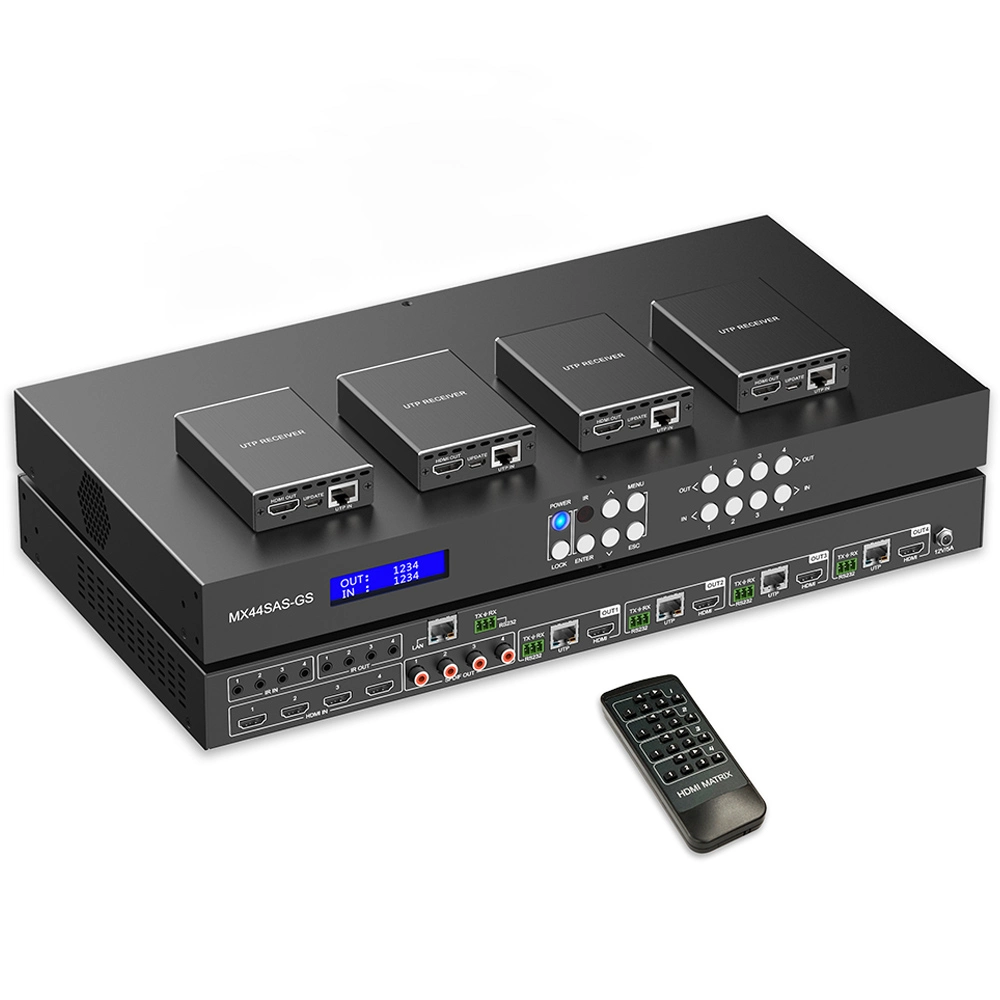
The MX44HAS2 4K60 4x4 HDMI matrix routes four sources to four displays at up to 4K60 4:4:4, and if your project team is evaluating audio visual equipment suppliers alongside other audio visual suppliers, this 18Gbps unit pairs Dolby Vision and HDR10 support with coaxial audio breakout, EDID management and push-button, IR, RS-232, IP or Web GUI control for boardrooms, training centers and control rooms.

4K60 444 HDMI Matrix 4x4 – Dolby Vision, Audio Breakout, IP, RS232 & IR Control, HDCP 2.2, 18Gbps

Five Supplier Models, Five Different Risks

Where you buy a matrix from changes more than the price. The same part number can arrive with a different firmware revision, a different EDID table, and a different support path depending on which of these five you are dealing with.

Manufacturer

Best for: OEM/ODM work, firmware and EDID questions that need an engineering answer, and volume projects.
Watch: minimum order quantities and lead times that follow a production schedule rather than a stock level. Spec sheets are usually the authoritative ones.

Distributor

Best for: stocked units, fast delivery, and mixed-brand orders.
Watch: firmware questions get relayed rather than answered. Ask which revision is in the box before you commit.

Value-added reseller

Best for: bundling, configuration, and local support.
Watch: the spec sheet may be a rewritten copy. Verify any number against the manufacturer's own document.

Systems integrator

Best for: design, commissioning, and someone owning the outcome on site.
Watch: you are buying a solution, so the bill of materials may not name the exact model you specified.

Marketplace listing

Best for: one-off replacements.
Watch: unverifiable provenance, no firmware support, and returns that depend on a third party. Not a route for a project with a warranty obligation.

A useful cross-check on any of them: a real manufacturer publishes a catalogue of what it builds. The 4K HDMI switch catalogue overview is what that looks like.

Reading a Spec Sheet Like a Buyer

This is the same datasheet content a supplier will send you, annotated so each line answers a question you would otherwise discover on site.

Published value Why it matters in the room
4x4 matrix, independent switching Four sources to four displays, any input to any output. Independent means changing one room's screen does not disturb the others.
18 Gbps bandwidth The headroom that makes 4K60 4:4:4 possible. A 10.2 Gbps switch will not carry the same signal.
Up to 4K @60Hz YUV 4:4:4 8-bit Full colour resolution without chroma subsampling — the difference between text on a spreadsheet staying sharp and turning soft.
HDR10 and Dolby Vision; HDR at 4K60 4:2:0 10-bit HDR is carried at the bandwidth the format allows, rather than being claimed and dropped.
HDMI 2.0 / 2.0a, HDCP 2.2 HDCP 2.2 is what lets protected 4K sources handshake at all. Without it the source simply refuses to output.
EDID management, including EDID learning The single most common cause of “no signal” on a matrix. Learning from the connected display, or forcing a pre-programmed table, is what prevents handshake conflicts.
Scaler output Lets a lower-resolution display stay in the system without forcing every source down to its ceiling.
Coaxial S/PDIF audio breakout per HDMI output Audio can be extracted at each output for a separate amplifier or DSP instead of being locked to the display's speakers.
Control via push buttons, IR remote, RS-232, IP, Web GUI, USB Choose the path the room already uses: a button panel for a lectern, RS-232 or IP for a control system, the Web GUI for commissioning.
Signal retiming, no loss of quality Each output is re-clocked, so long cable runs do not accumulate jitter.
Plug and play, no driver required Installs without a software stack on the host — a week-one commissioning cost you do not pay.
Metal enclosure, ESD protection, surface mountable Shielding and heat dissipation in a rack, plus ESD protection against the failure mode that kills matrix units in service.
FCC, CE and RoHS compliantCertification documentation for the markets the project ships into.

The supplier's own design notes are worth reading alongside the datasheet — technical insights into 4x4 HDMI matrix design covers why these choices are made.

Tracing the Signal Chain

Every AV project is the same four stages. A supplier is only as useful as the number of stages it can actually answer for, so map your project onto this before you shortlist.

1. Source

Laptops, media players, cameras, and the video conferencing codec. The source sets the ceiling: no switcher can add resolution a source never produced.

2. Switch and process

Where the MX44HAS2 sits. It routes four sources to four displays, manages EDID so sources and screens agree, scales where a display lags behind, extracts audio per output, and re-times the signal.

3. Extend

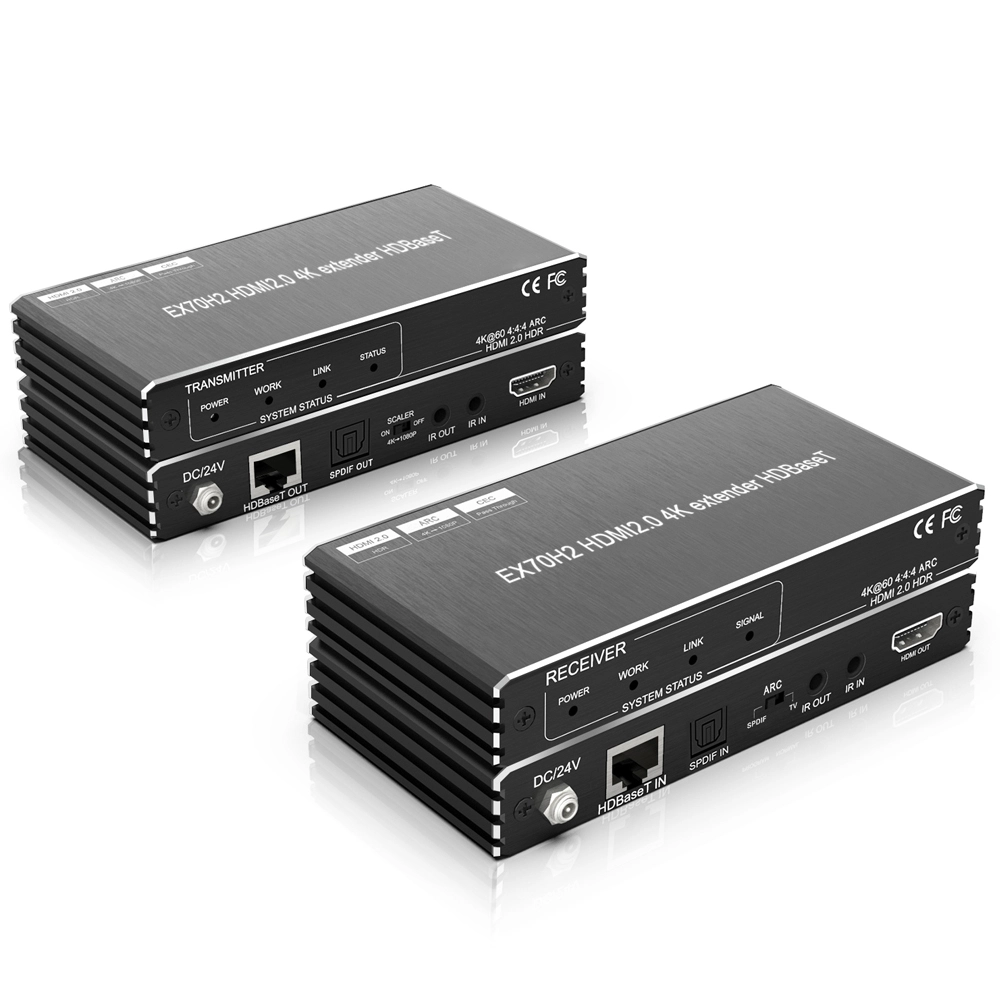
HDBaseT, fibre, or active copper runs beyond the rack. Ask what extension the supplier supports, and whether it is tested with this matrix rather than assumed to work.

4. Display and control

The screens, plus whatever issues the commands — a control processor over RS-232 or IP, a Web GUI, an IR handset, or the front-panel buttons.

A supplier that covers only stage two is a component vendor, not a project partner. One that can talk through all four — and has tested the seams between them — is the one worth the second meeting. Comparing HDMI matrix solutions for enterprise meeting rooms works through the same stages.

Ten Points to Check Before You Shortlist

Ask these of every bidder. They are deliberately answerable with documents rather than assurances, and none of them depends on a particular supplier.

Ask What a good answer looks like
Product roadmap and firmware cadence A dated revision history, and a route to receive updates after purchase.
EDID interoperability testing Evidence that the switching units have been tested against common displays and sources, not just against the manufacturer's own bench.
Control-API documentation A published RS-232 and IP command set you can hand to the control programmer before delivery.
RMA and spares policy A named process, a response window, and stocked spares for the unit you are buying.
Certifications The specific marks held for the model you are ordering — for this unit, FCC, CE, and RoHS.
MOQ A clear figure that holds whether you ask sales or engineering.
Lead time Production and shipping quoted separately, with the departure point named.
OEM/ODM capability A direct answer on branding the unit and the packaging, with the artwork process described.
Warranty A written term, what is excluded, and how a claim is raised.
Sample policy Whether a unit can be bought at sample pricing for bench testing before a project order.

If a bidder cannot produce the document behind an answer, treat the answer as unverified. That is the whole point of asking before the order rather than after.

Where the MX44HAS2 Is Used

Boardrooms and presentation suites

Multiple sources shared between a room display, a confidence monitor, and a capture device, switched independently without re-cabling.

Training centres and education

An instructor's source mirrored to several screens while a second source runs on a different output.

Control rooms and broadcast

Signal retiming and EDID management matter most where a display being powered down must not take the rest of the chain with it.

Showrooms and event venues

Simultaneous media on multiple screens, with audio broken out per output to the house system.

Production and editing suites

Monitoring stations that need full 4:4:4 colour rather than a subsampled feed.

Make the Quote Request Count

A matrix quote can only be accurate against a described signal chain. Send these eight points and the reply becomes a bill of materials rather than a catalogue page.

  • The project description and the rooms involved.
  • The signal chain: sources, the switching point, extension, and displays.
  • Required resolution and bandwidth — 4K60 4:4:4 needs 18 Gbps.
  • Whether HDCP 2.2 protected sources are in the chain.
  • EDID requirements, including any display that only accepts a fixed timing.
  • Extension distance from the rack to the furthest display.
  • The control protocol the room uses: push button, IR, RS-232, IP, or Web GUI.
  • Quantity, certification requirements for the destination market, and your timeline.

Send those through the contact page, or review the MX44HAS2 product page for the full published specification first.

Related Reading

Three notes to help clarify product requirements before contacting the supplier.

Technical Insights into 4x4 HDMI Matrix Design for Integrators and AV Professionals

This 4x4 HDMI matrix delivers true 4K UHD at 60Hz with 4:4:4 color, advanced EDID management, and robust metal housing for reliable, flexible AV integration in demanding environments.

Read article

Comparing HDMI Matrix Solutions for Enterprise Meeting Room Installations

This 4x4 HDMI matrix supports four simultaneous 4K 60Hz sources with HDCP 2.2, offering flexible control, modular expansion, and reliable AV performance for enterprise meeting rooms.

Read article

Catalog Overview of 4K HDMI Switches Available for Professional Integrators

Professional 4K HDMI switches support 18Gbps bandwidth with 4x4 matrix routing, scalers, audio extraction, and certified durable construction for seamless multi-display AV integration.

Read article

Frequently Asked Questions

what does the mx44has2 switch?

it routes four sources to four displays at up to 4k60 4:4:4 over an 18gbps signal path, with hdcp 2.2 handled in the same unit.

which hdr formats and audio features does it support?

dolby vision and hdr10 are both supported, and the unit provides coaxial audio breakout so the audio can be routed to a separate amplifier or dsp.

how can the matrix be controlled?

front push buttons, ir, rs-232, ip or the web gui, so the same unit can be driven from a control system or from a browser.

what does edid management do here?

edid management is listed among the unit features: it is what keeps each source and each display agreeing on a format both accept in a mixed 4k and 1080p installation.

where is this matrix typically installed?

boardrooms, training centers and control rooms are the deployments named for the mx44has2.

what should be confirmed before ordering?

confirm the 4x4 port count and the signal path you need, the control method your av team already uses, whether dolby vision and hdr10 sources are in the chain, and where the coaxial audio breakout feeds.

Leave a message
Full Name *
Email *
Message *
Message Us