
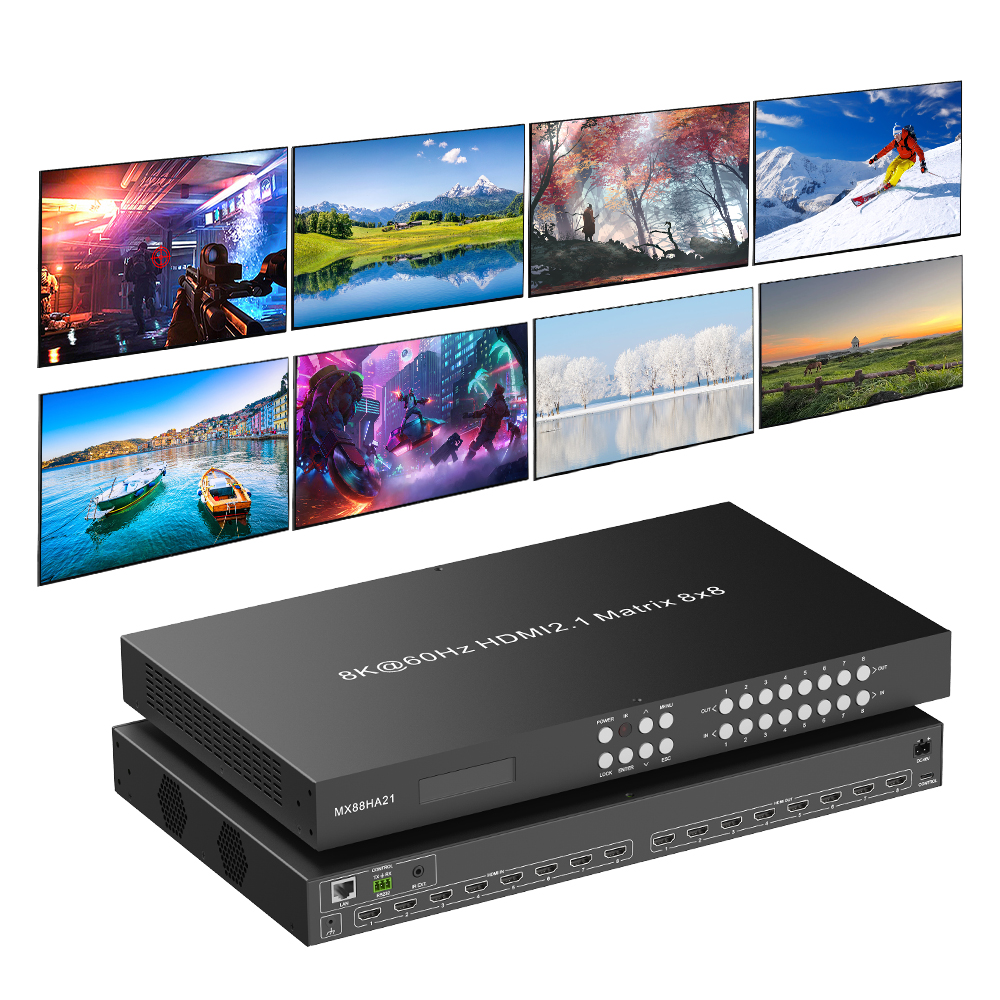
People often ask:
"What is an 8K HDMI matrix switcher?"
Then the next question follows:
"How does an 8K HDMI matrix switcher work?"
Fair question.
It sounds like one of those complex AV terms, but in reality, it’s simply a smart device that controls where video signals go.
From gaming consoles and media players to TVs and projectors, an HDMI matrix manages signal routing behind the scenes. It removes the need to unplug and reconnect cables.
At the same time, display technology is evolving rapidly. More projects now use ultra-high-resolution LED video walls with resolutions like 7680 × 2160.
They also use custom display formats.
Traditional 4K matrix switchers often struggle with these applications, resulting in image scaling, reduced detail, and limited display flexibility.
That’s where an 8K HDMI matrix switcher becomes the better solution.
Once you see one in action, you'll immediately understand how much time, effort, and troubleshooting it can save.
An HDMl matrix switchis a device that allows you to connect multiple HDM sources to multiple displays, and route any source
Many models also include:
These features make HDMI matrix systems ideal for conference rooms and control centers. They also work well for digital signage, esports venues, and professional AV installations.
The easiest way to understand an HDMI matrix is to think of it as a traffic controller for your AV system.
Instead of assigning one source to one display, it allows multiple sources and multiple displays to work together.
Imagine you have:
And several displays are located throughout a building.
With an HDMI matrix, you can instantly choose which source appears on which screen.
No cable swapping.
No signal interruption.
No complicated rewiring.
Just complete flexibility.
In a restaurant, one display can show sports while another runs digital menus.
In a hotel, different screens can display promotional content, event schedules, or live TV.
At home, TVs in multiple rooms can share the same source devices without requiring duplicate equipment.
Once you've experienced that level of control, it's difficult to go back to traditional connections.
HDMI matrix switchers are available in a variety of configurations, including:
Each input receives both video and audio signals from source devices.
Each output connects directly to a display.
When you send a command from a remote, web interface, touch panel, or automation system, the matrix receives it.
It then routes the selected input to the output.
The process involves more than simply copying signals.
Behind the scenes, the matrix manages:
High-bandwidth Digital Content Protection (HDCP) ensures protected content can be displayed properly.
Extended Display Identification Data (EDID) helps source devices communicate with displays and select the correct resolution and format.
Together, these technologies ensure:
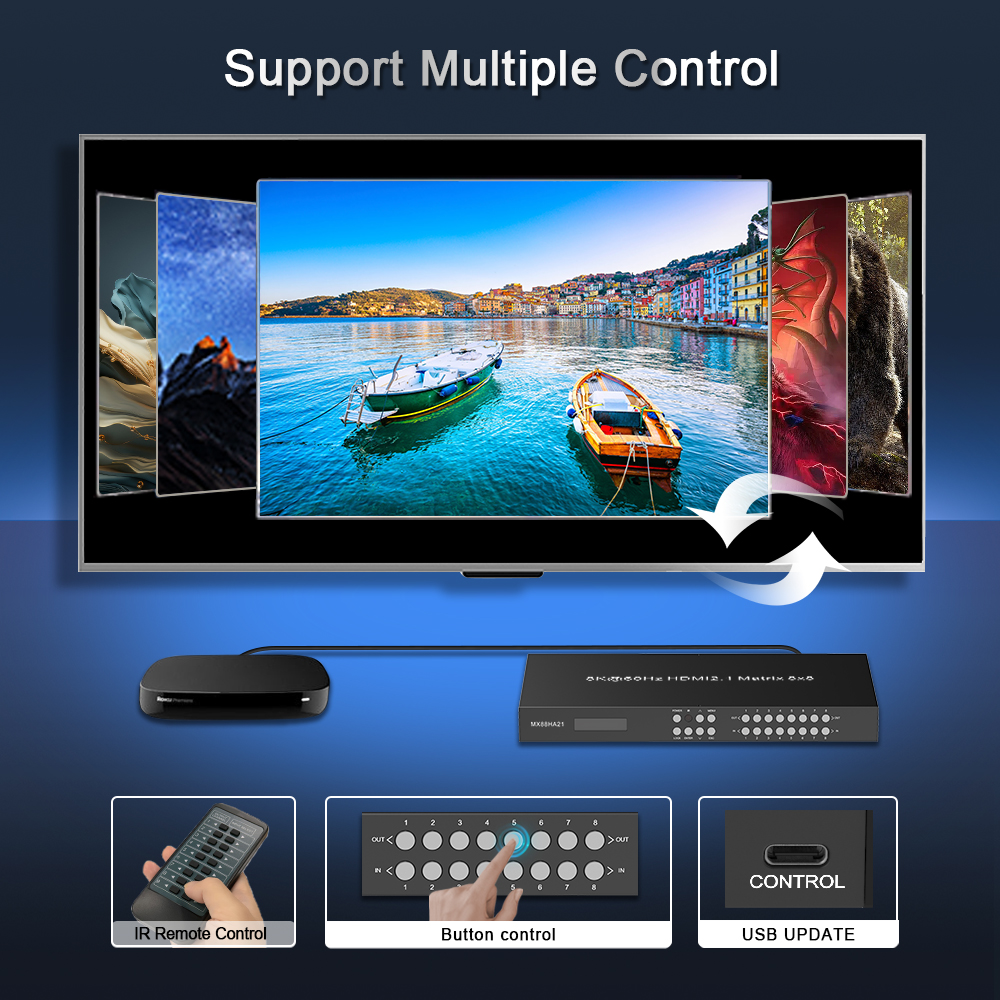
HDMI matrix switchers are widely used in both commercial and residential environments.
Route presentations and video conferencing content to multiple displays.
Distribute critical information across video walls and operator workstations.
Manage advertising and promotional content across multiple screens.
Display synchronized marketing content throughout the store.
Switch between teaching materials and multimedia sources with ease.
Share media sources between multiple TVs and rooms.
A professional HDMI matrix not only improves convenience but also maintains signal integrity across complex AV systems.
Before selecting an HDMI matrix switcher, consider the following factors:
For 4K HDR applications, choose a matrix with at least 18Gbps bandwidth.
For 8K systems, HDMI 2.1 bandwidth support is highly recommended.
Make sure the matrix supports the resolutions and refresh rates required by your displays.
Examples include:
HDCP support is essential when working with streaming platforms, Blu-ray players, and protected content.
Look for support for:
Professional installations often require:
For larger projects, consider matrix systems that integrate with HDBaseT extenders or AV distribution systems.
A well-designed power supply, reliable chipset, and proper thermal management contribute significantly to long-term performance.
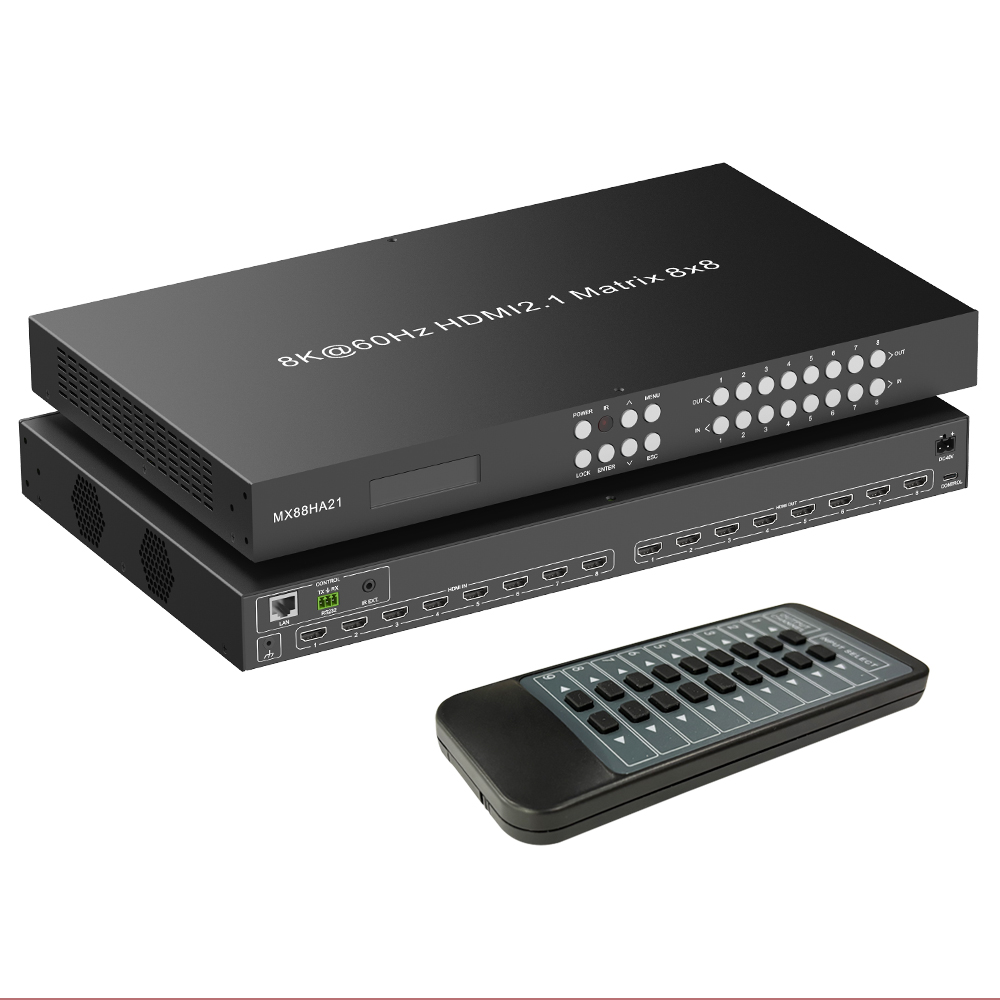
The MX88HA21 is designed for professional AV environments that require high-bandwidth signal routing and reliable multi-display distribution.
For users planning large-scale AV deployments, the MX88HA21 offers the performance and flexibility required for modern 8K applications.
Not all HDMI matrix switchers are built the same.
Budget models may work well initially but often struggle when handling high-bandwidth signals over extended periods.
A high-quality matrix switcher provides:
These are the differences that separate professional AV installations from systems that constantly require troubleshooting.
GPRO designs its HDMI matrix systems with real-world AV installations in mind.
The focus is simple:
Whether you're building a conference room, digital signage network, control center, or LED video wall system, GPRO matrix switchers provide the flexibility and performance required for professional deployments.
An 8K HDMI Matrix Switcher is far more than a simple signal router.
It lets AV professionals manage many sources and displays with ease. It also provides the bandwidth needed for today’s ultra-high-resolution content.
As 8K displays, LED video walls, and HDMI 2.1 devices become increasingly common, investing in a high-performance matrix switcher helps future-proof your AV infrastructure.
Whether you're designing a conference room, command center, broadcast facility, digital signage network, or premium home theater, an 8K HDMI matrix offers greater flexibility, improved performance, and long-term value.

